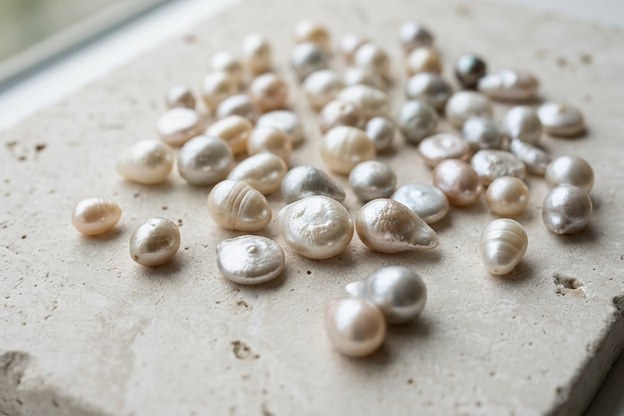
Freshwater Pearls
The accessible entry point — thick nacre, wide colour range, excellent value.
Four types account for almost the entire market. Knowing which is which explains most of the price difference you see.
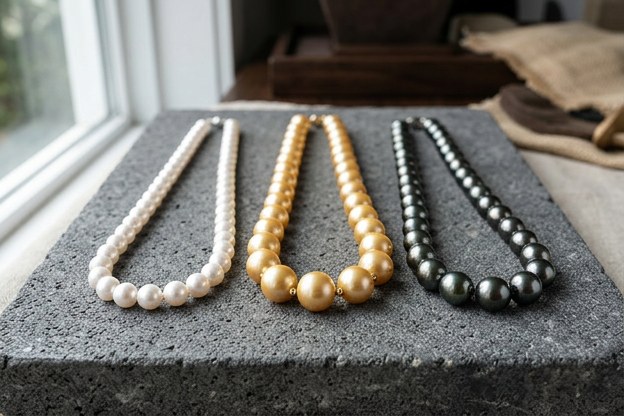
Almost every pearl sold today is cultured, and cultured pearls fall into four commercial families. They differ by the mollusc that grew them, the water they grew in, and how long they were left to develop.
| Freshwater | Akoya | Tahitian | South Sea | |
|---|---|---|---|---|
| Mollusc | Freshwater mussel | Pinctada fucata | Pinctada margaritifera | Pinctada maxima |
| Water | Fresh | Salt | Salt | Salt |
| Size | 5–12 mm | 6–9 mm | 8–16 mm | 9–20 mm |
| Shape | Round to baroque | Very round | Round to baroque | Round to baroque |
| Nacre | Thick, often solid | Thin (0.3–0.5 mm) | Thick | Very thick |
| Lustre | Soft to good | Sharp, mirror-like | Deep, metallic | Soft, satiny |
| Price | Entry | Mid–high | High | Highest |
The accessible entry point — thick nacre, wide colour range, excellent value.
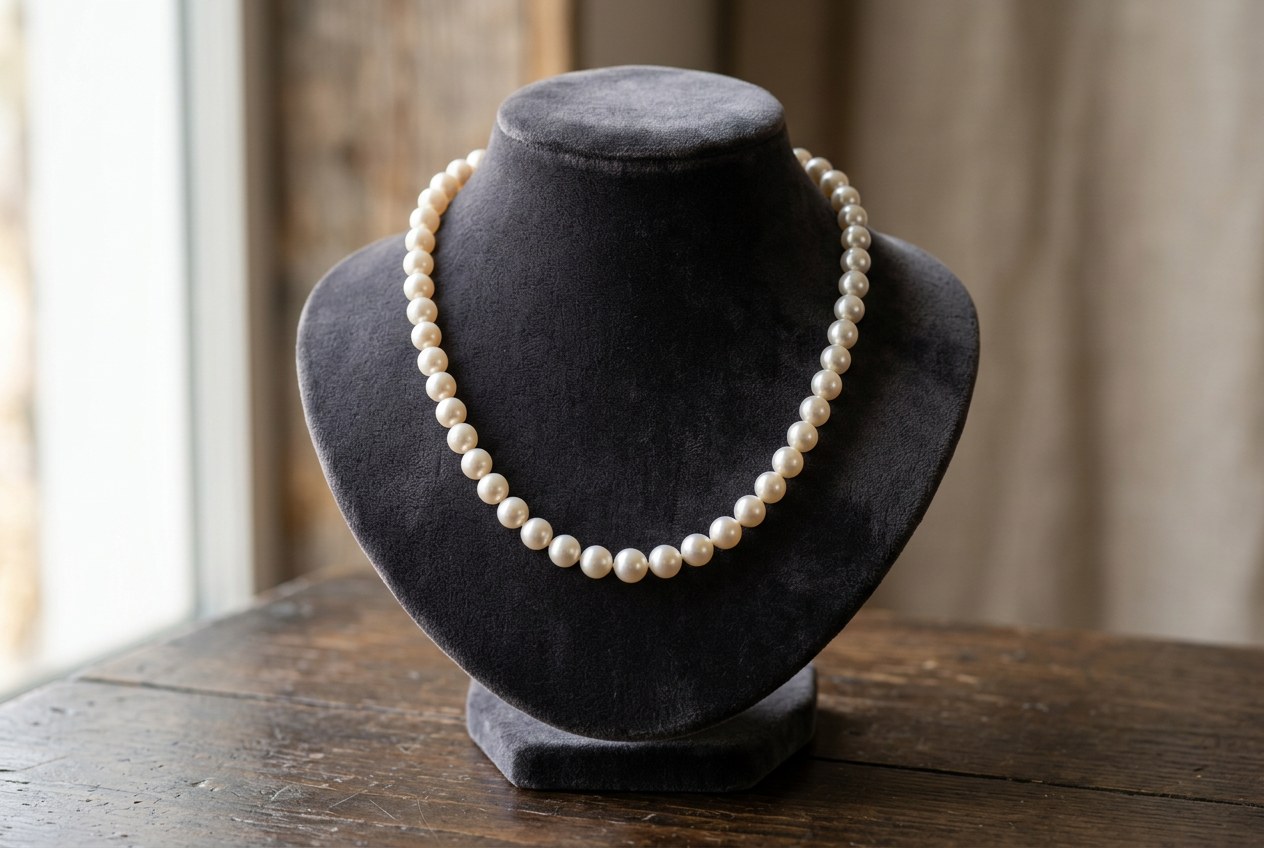
The classic white strand. Unmatched lustre, but thin nacre demands care.
Naturally dark, with green, aubergine and peacock overtones.
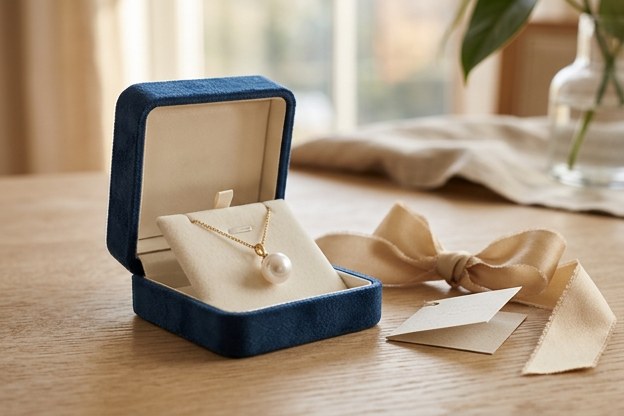
The largest and most valuable, in white, silver and golden.